
Find how far it goes
Dry rot is wood decay from moisture that stayed too long. The contractor probes around the damage to see how far soft wood extends.
A loose board, a soft corner or a stain under a window? Fix it before water reaches the wall framing behind it.
Most siding damage starts small: a cracked board from a ladder or ball, a corner that pulled loose in a windstorm, or a gap where caulk gave up. Fixed early, it's a repair of a few boards. Left through a wet season in Hillsboro, Oregon, water can rot the sheathing and studs behind it.
Older houses need the most care. Downtown Hillsboro is the city's historic center, with buildings dating to the late 1800s, and homes built before 1978 fall under Oregon's lead-based paint rules. A contractor working on those homes needs a Lead-Based Paint Renovation license from the Construction Contractors Board.
For the bigger picture on repair versus replacement, see the siding contractor in Hillsboro overview, then call (564) 216-1408 with what you're seeing.
Calls usually start with one of these:
A stain usually means water is getting in above it, so the fix may be at the window head or the roof line rather than at the stained board.
Call (564) 216-1408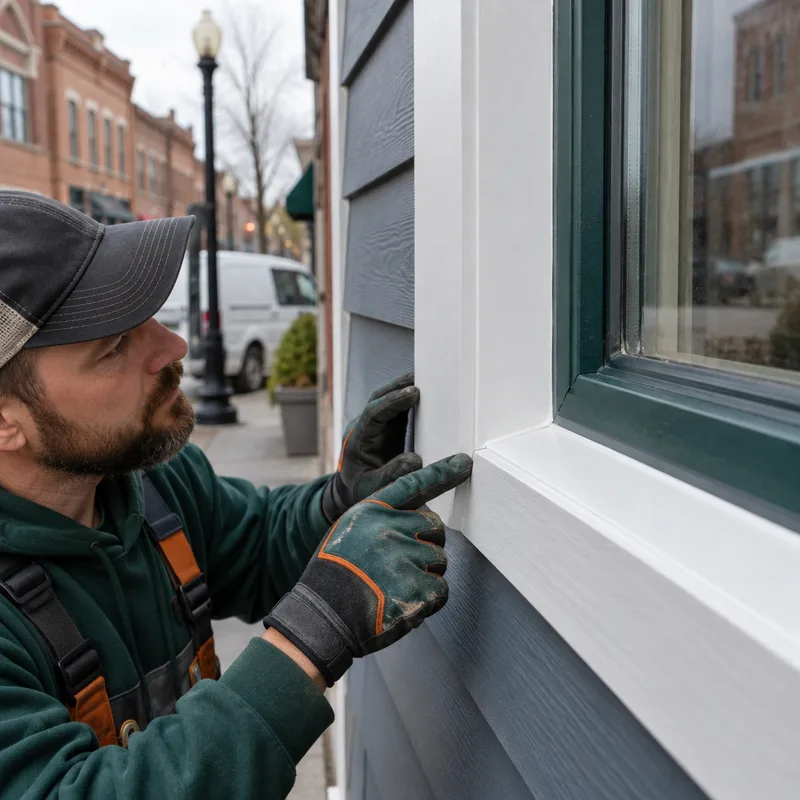
Dry rot is wood decay from moisture that stayed too long. The contractor probes around the damage to see how far soft wood extends.
Rotted sheathing is cut out to solid material and replaced; patching over soft wood only hides the problem.
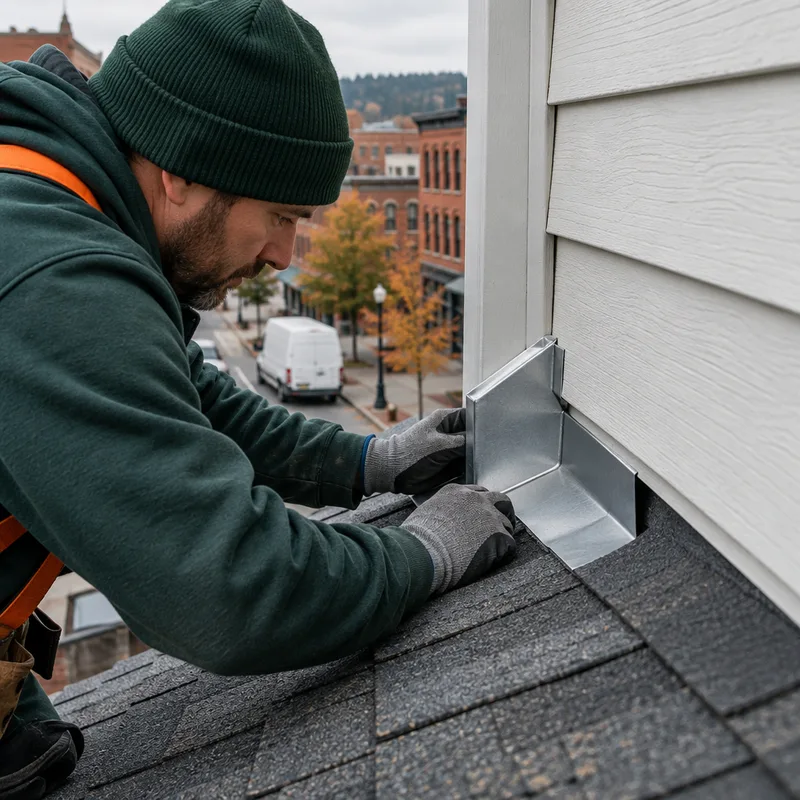
Rot comes back if the leak stays. Missing kickout flashing, failed window flashing or soil against the wall is usually the cause.
If studs or the sill plate are soft, the framing is repaired before new sheathing goes on.
New sheathing gets house wrap tucked under the existing wrap above it, so water drains out over the repair, not into it.
The contractor traces the damage to its source: impact, wind, a flashing gap or water wicking up from the ground.
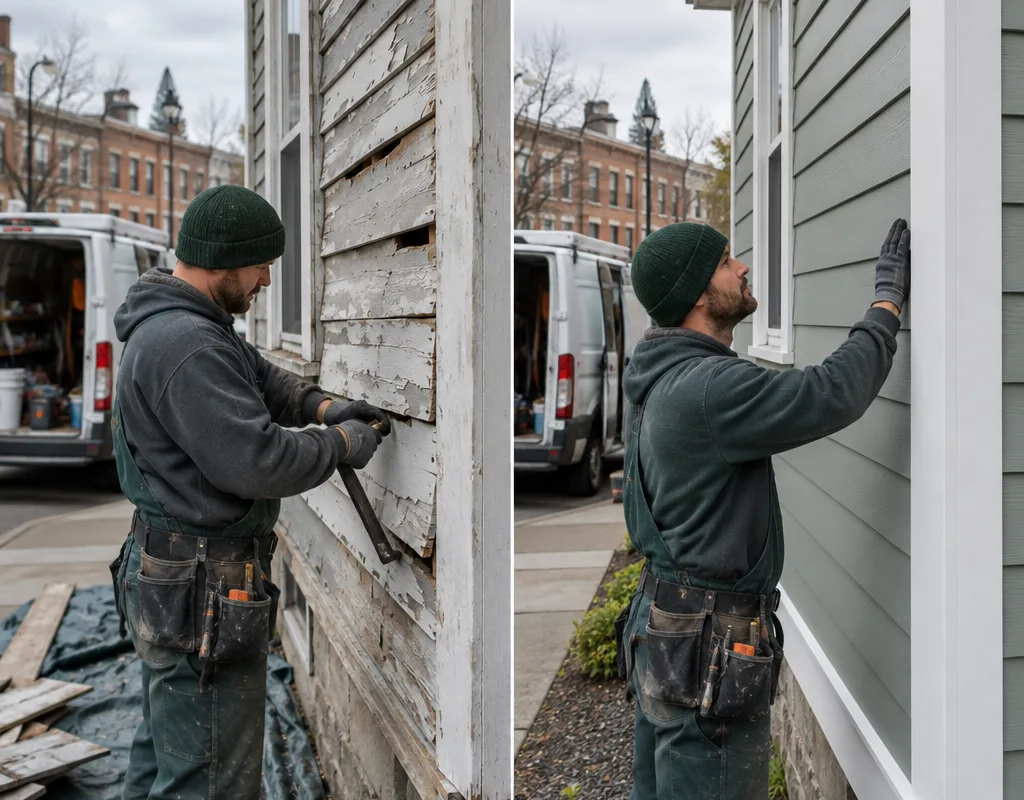
The profile, exposure and material are identified and the closest match sourced; discontinued boards may come from a hidden wall.
Damaged boards come off carefully so the surrounding siding can stay in place.
Soft sheathing is replaced and house wrap and flashing are patched in so water sheds over the repair.
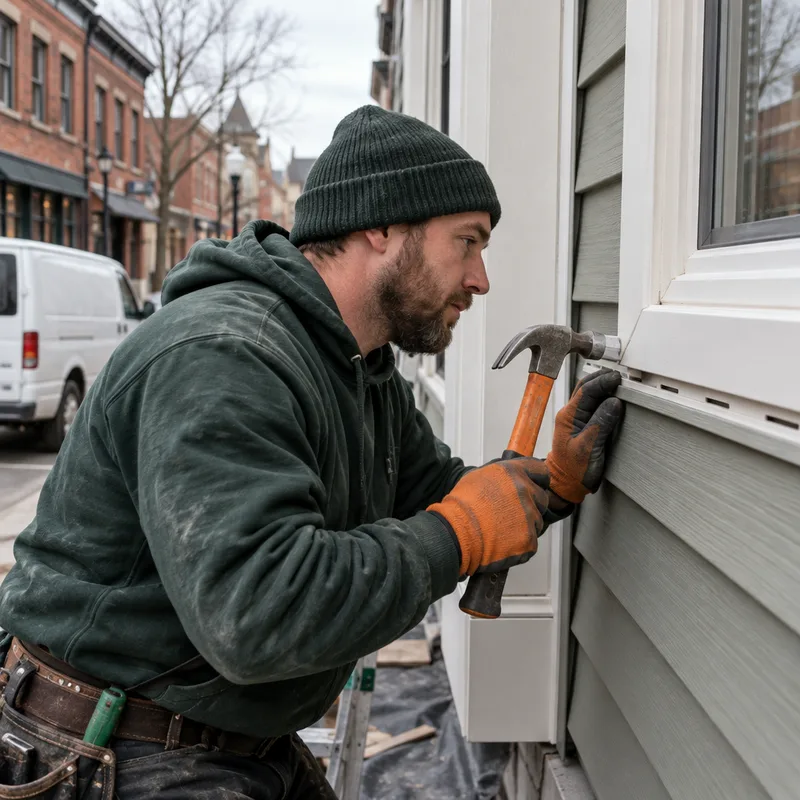
New boards go in, and paint or color is blended to the wall around them.
Repairing a damaged section of siding in Hillsboro, OR typically costs about $900 to $3,000.
Single boards cost less; dry rot in the sheathing, second-story work and hard-to-match materials cost more. When damage covers several walls, whole-house replacement, typically about $7,000 to $30,000, can be the better buy. These are typical ranges, not quotes.
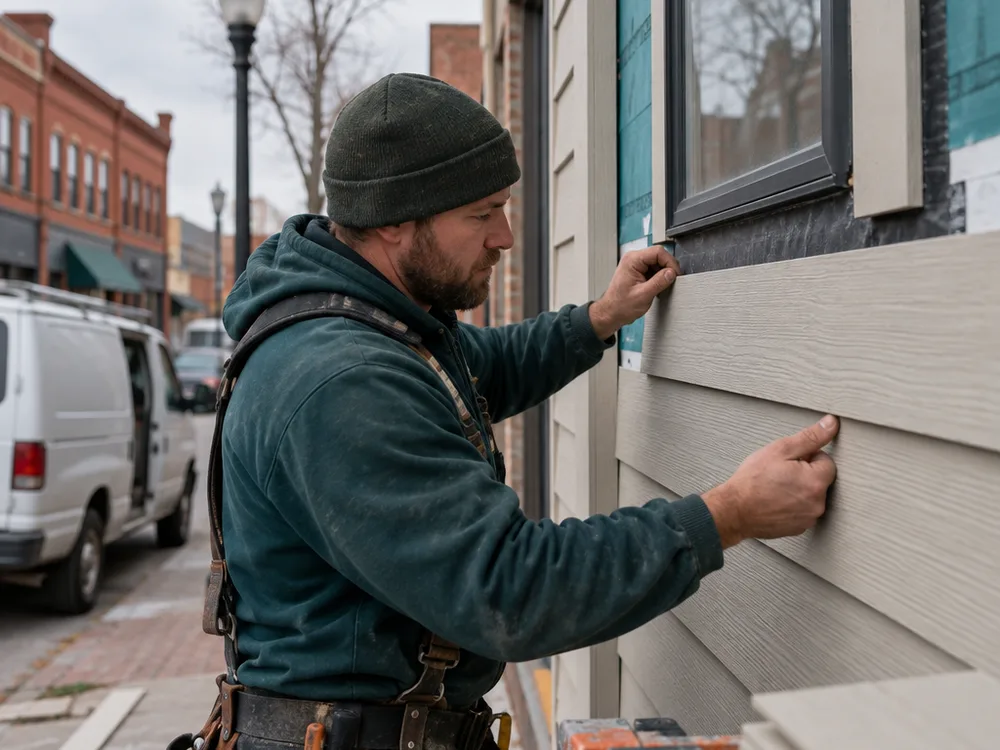
Board cracked or loose after a storm? Get it fixed before rain.
Repairing a damaged section of siding typically costs about $900 to $3,000. Single boards cost less, and dry rot, second-story work or hard-to-match materials cost more.
Usually close, not always exact. Profile and exposure can be matched; faded paint or vinyl may need repainting or boards taken from a less visible wall.
Yes. A few boards cost little compared with replacing rotted sheathing later, and a long wet season turns small gaps into wall damage.
Replacing siding alone is generally exempt from a building permit under Oregon's residential code, but replacing the sheathing or framing behind it usually needs one. The City of Hillsboro Permitting Center confirms what a specific job needs.
Water that stays in the wall: missing or failed flashing, boards too close to soil or roofing, and gaps at windows. Fixing the source matters as much as replacing the rotted wood.
Replacing one vinyl piece is a manageable do-it-yourself job; anything involving soft wood, flashing or second-story work is better left to a licensed contractor.
Call (564) 216-1408 to talk with an experienced local contractor about the damage and what a repair would involve.