
Dust is regulated
Cutting fiber cement releases silica dust. OSHA's silica rule requires crews to control it, typically with a saw connected to a dust collection system when cutting outdoors.
Tired of siding that rots, warps or needs paint every few summers? Fiber cement holds up to wet winters and keeps paint longer.
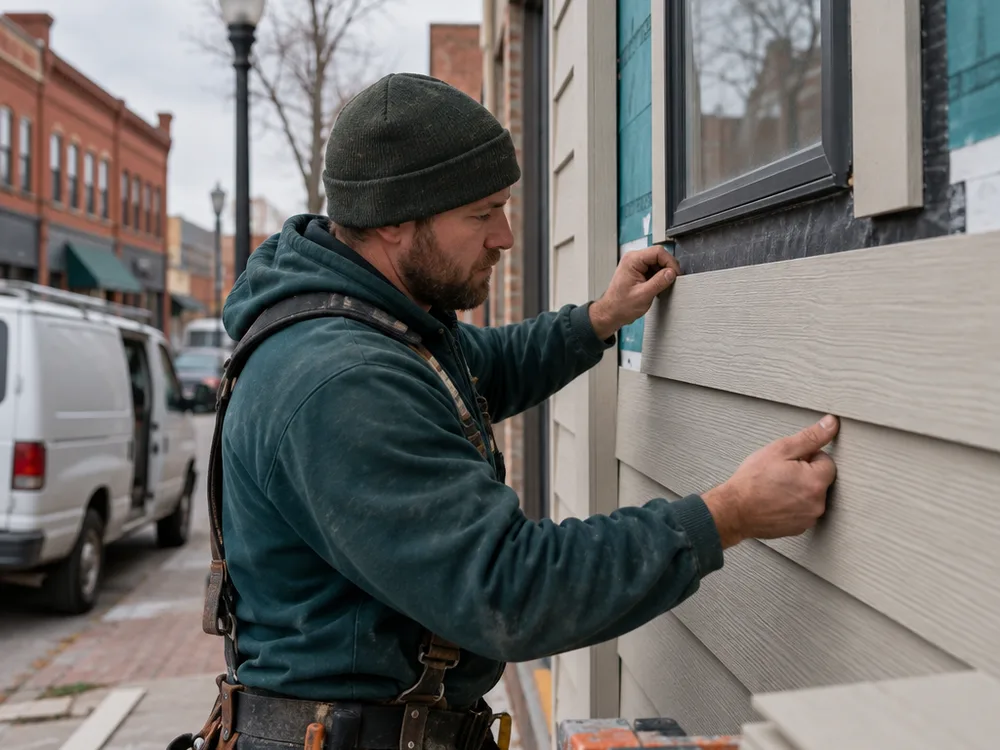
Fiber cement is made from cement, sand and wood fibers, so it doesn't rot, swell or attract insects the way wood products can. It costs more than vinyl and weighs much more, which makes installation a job for an experienced crew.
Wet weather is where it earns its price. Hillsboro, Oregon averages about 6 inches of rain a month from November through January, and fiber cement stays stable through that season as long as its cut ends are sealed and it sits above the ground and roofing.
Comparing it with other materials or repair options? The local siding contractors overview covers both.
Common choices:
James Hardie is a common brand to ask about; the contractor can confirm which brands and product lines they install.
Call (564) 216-1408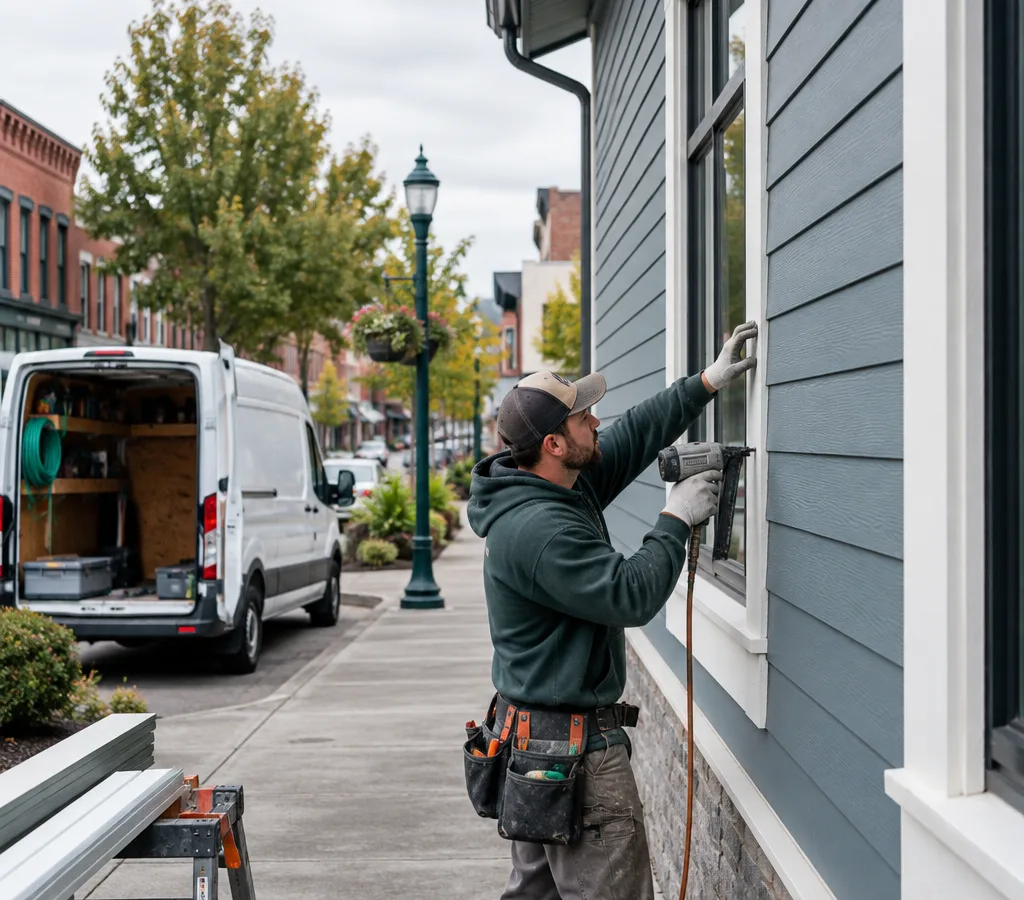
Cutting fiber cement releases silica dust. OSHA's silica rule requires crews to control it, typically with a saw connected to a dust collection system when cutting outdoors.
Boards weigh far more than vinyl, so long pieces take two people and fastening follows the maker's nailing pattern.
Field cuts are primed or painted so water can't wick into the board edges.
Boards stop above roofing and soil so they never sit in water, and kickout flashing sends roof runoff away from the wall.
Factory color costs more up front; field paint lets you choose any color and repaint later.
Pick lap, panel or shingle, smooth or textured, and factory color or field paint.
Old siding comes off and soft sheathing is replaced before anything new goes on.
House wrap and flashing go on at windows, doors and roof lines.
Boards are cut with dust controls and fastened to the maker's pattern, with gaps at trim.
Joints are finished, cut ends sealed, and field-painted boards get their topcoats.
Fiber cement siding for a whole house in Hillsboro, OR typically costs about $15,000 to $30,000.
It runs higher than vinyl, typically about $7,000 to $25,000, because the boards cost more and need more labor. A factory finish, a second story and sheathing repairs push the price up. These are typical ranges, not quotes.
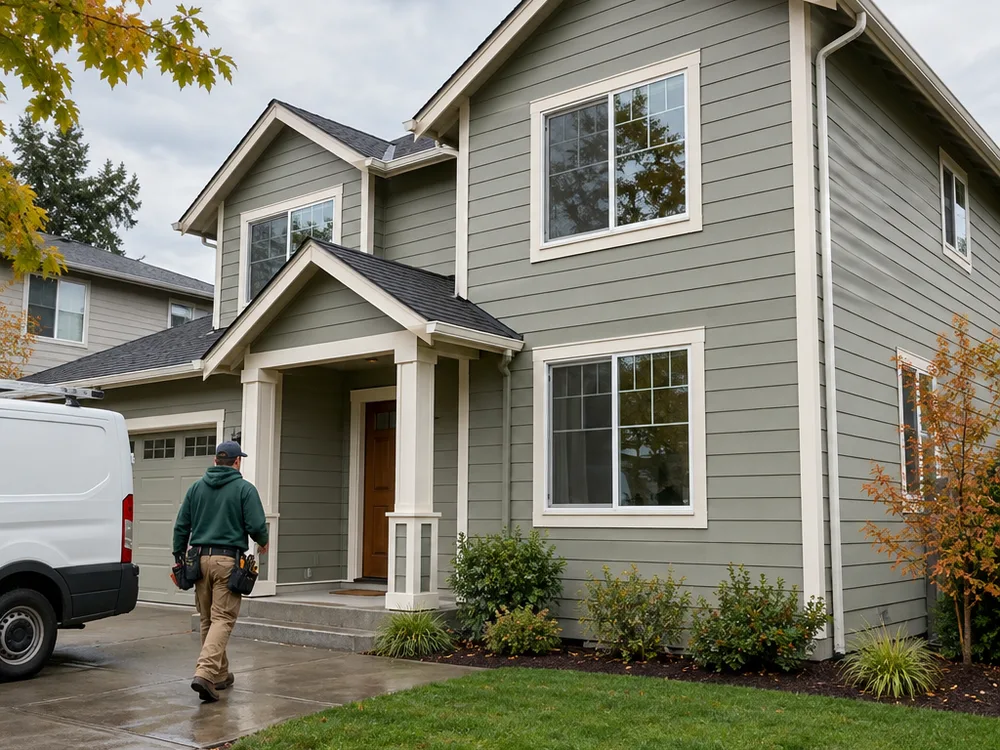
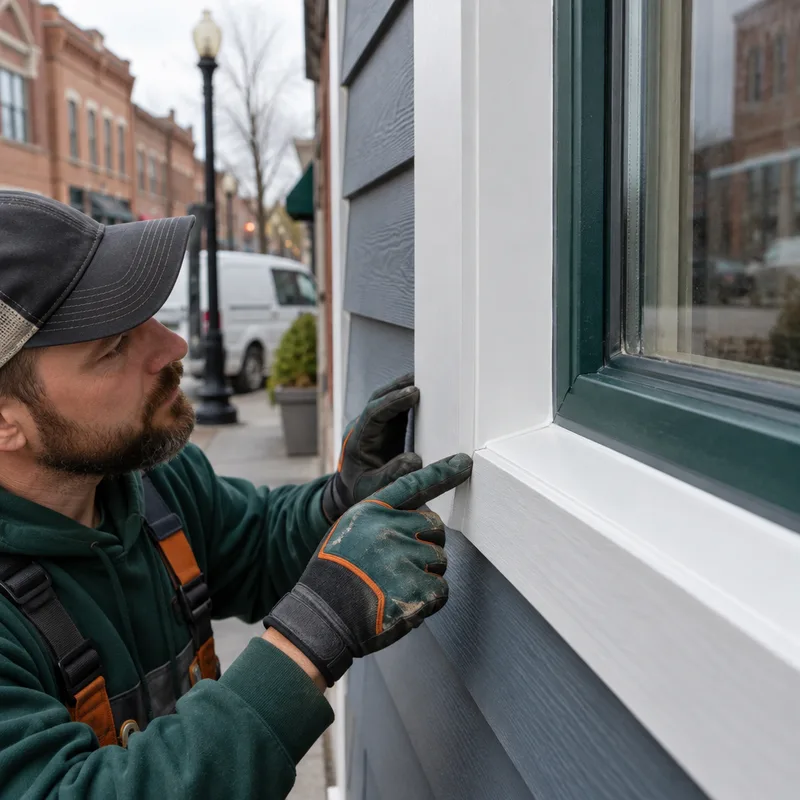
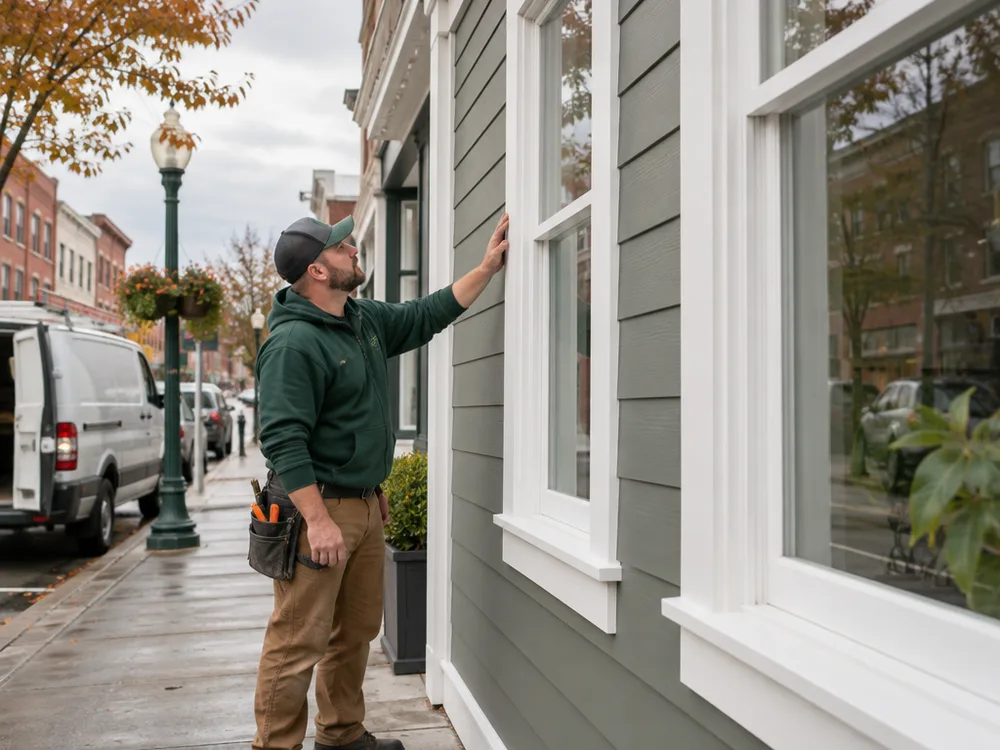
Done repainting rotting wood? Switch to boards that hold paint.
A whole house in fiber cement typically costs about $15,000 to $30,000, compared with about $7,000 to $25,000 for vinyl.
It's more durable, resists fire and holds paint for years, but it costs more and needs repainting eventually; vinyl is cheaper and never needs paint.
Factory-finished boards come painted; primed boards need paint soon after installation. Either way, cut edges need primer or paint.
Yes, and smooth lap boards suit many older homes. Homes built before 1978 fall under Oregon's lead-based paint rules, so tear-off there needs a contractor with a Lead-Based Paint Renovation license.
Replacing siding alone is generally exempt from a building permit under Oregon's residential code, but replacing the sheathing or framing behind it usually needs one. The City of Hillsboro Permitting Center confirms what a specific job needs.
Fiber cement is cement-based, heavier and doesn't burn or rot; engineered wood is lighter, easier to cut and cheaper, but needs sealed edges and paint to stay dry.
Call (564) 216-1408 to talk with an experienced local contractor about styles, finishes and what a whole-house job involves.